
Director Liability in India: When Can Directors Be Personally Sued or Prosecuted?

Director Liability in India: When Can Directors Be Personally Sued or Prosecuted?

A company is a separate legal person. Its directors manage the company, but they do not ordinarily become personally liable for every debt, contract, default or wrongful act of the company merely because they hold office as directors. This distinction is fundamental to Indian company law. At the same time, the protection of separate corporate

Director Liability in India: When Can Directors Be Personally Sued or Prosecuted? Read More »
Shareholder Disputes in Private Companies: Board Deadlock, Minority Rights and Legal Remedies

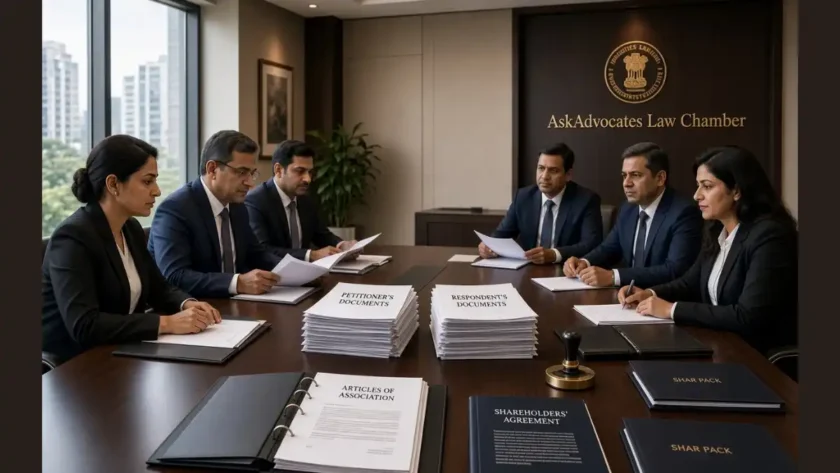
Shareholder Disputes in Private Companies: Board Deadlock, Minority Rights and Legal Remedies

Shareholder disputes in private companies can become significantly more complicated than ordinary commercial disagreements. A dispute may begin with disagreement between two founders and later involve board deadlock, exclusion from management, disputed share transfers, refusal to provide information, removal of directors, competing shareholder groups, alleged diversion of assets, disputed allotment of shares, or breakdown of

Shareholder Disputes in Private Companies: Board Deadlock, Minority Rights and Legal Remedies Read More »

How to Challenge or Quash an FIR in India: High Court Remedies under BNSS

How to Challenge or Quash an FIR in India: High Court Remedies under BNSS

Registration of an FIR does not mean that the accused has been found guilty. An FIR starts or records the criminal investigation process. In appropriate cases, however, an accused person can approach the High Court and seek judicial intervention before the criminal process proceeds further. Under the Bharatiya Nagarik Suraksha Sanhita, 2023, Section 528 preserves

How to Challenge or Quash an FIR in India: High Court Remedies under BNSS Read More »

Regular Bail in India Under BNSS: When and How Can an Accused Seek Release After Arrest?

Regular Bail in India Under BNSS: When and How Can an Accused Seek Release After Arrest?

Regular bail is the principal remedy by which an accused person in custody seeks release during a criminal proceeding. The fact that an offence is described as “non-bailable” does not mean that bail is legally impossible. It means that bail is not an automatic statutory entitlement in the same way as bail for a bailable

Regular Bail in India Under BNSS: When and How Can an Accused Seek Release After Arrest? Read More »

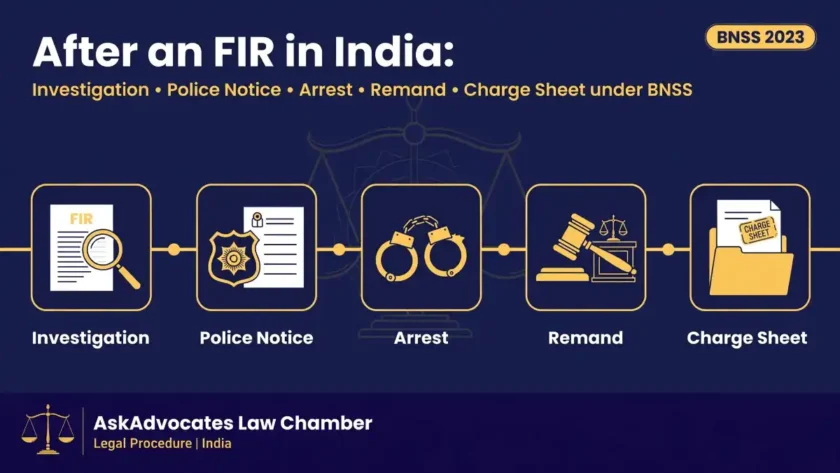
After an FIR in India: Investigation, Police Notice, Arrest, Remand and Charge Sheet under BNSS"

After an FIR in India: Investigation, Police Notice, Arrest, Remand and Charge Sheet under BNSS

Introduction: An FIR is not the end of a criminal case. It is generally the beginning of the formal criminal investigation process. First, after recording information regarding a cognizable offence, the investigating officer immediately collects relevant physical evidence and examines key witnesses. Subsequently, the police conduct necessary searches, seize critical documents, and issue statutory notices

After an FIR in India: Investigation, Police Notice, Arrest, Remand and Charge Sheet under BNSS Read More »

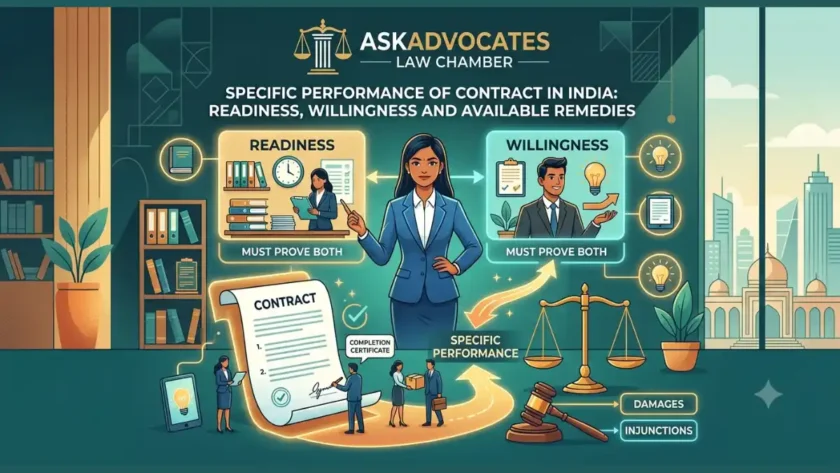
Specific Performance of Contract in India: Readiness, Willingness and Available Remedies

Specific Performance of Contract in India: Readiness, Willingness and Available Remedies

First, the Specific Relief Act, 1963 establishes specific performance as a primary contractual remedy in India when monetary compensation cannot adequately resolve a breach. Consequently, courts utilize this statutory power to direct defaulting parties to fulfill their exact contractual obligations. For instance, property sale agreements frequently generate high-stakes specific performance disputes, although the remedy applies

Specific Performance of Contract in India: Readiness, Willingness and Available Remedies Read More »

Temporary Injunction in India: When Can a Court Restrain the Other Party?

Temporary Injunction in India: When Can a Court Restrain the Other Party?

A temporary injunction is an important civil remedy when immediate court protection is necessary. It can prevent a party from taking an action that may seriously prejudice another party’s legal rights. Common examples include threatened dispossession, proposed alienation of disputed property, interference with possession, misuse of confidential information, or conduct that may cause serious harm

Temporary Injunction in India: When Can a Court Restrain the Other Party? Read More »

Civil Litigation in India: Choosing the Right Remedy, Court, Limitation and Evidence

Civil Litigation in India: Choosing the Right Remedy, Court, Limitation and Evidence

Civil litigation in India allows individuals, businesses, families and organisations to enforce private legal rights. A civil dispute can involve property, contracts, money, possession, injunctions, damages, declarations or other legal claims. Filing a civil case is not simply about approaching a court and presenting a grievance. The claimant must identify the correct legal remedy, competent

Civil Litigation in India: Choosing the Right Remedy, Court, Limitation and Evidence Read More »

RSS
Follow by Email
Scroll to Top