Departmental Enquiry Against Government Employees: Natural Justice and Defence Rights

A departmental enquiry can have consequences that extend far beyond an adverse entry in a service record. Depending on the applicable service rules, disciplinary proceedings may result in censure, withholding of increments, reduction in rank, compulsory retirement, removal or dismissal from service. They can also affect promotion, pension, reputation and future employment prospects. For that

Departmental Enquiry Against Government Employees: Natural Justice and Defence Rights Read More »
Hindu Coparcenary Property After Vineeta Sharma: Rights of Daughters Explained

The rights of daughters in Hindu coparcenary property changed fundamentally with the 2005 amendment to the Hindu Succession Act, 1956. The legal position was subsequently clarified by the Supreme Court in Vineeta Sharma v. Rakesh Sharma, (2020) 9 SCC 1. The central principle is straightforward: A daughter of a coparcener becomes a coparcener by birth

Hindu Coparcenary Property After Vineeta Sharma: Rights of Daughters Explained Read More »

Interim Maintenance in Matrimonial Proceedings: Eligibility, Evidence and Court Factors

Interim maintenance can become one of the most important issues in a matrimonial case. A divorce or other matrimonial proceeding may take time to conclude. During that period, one spouse may have substantially greater financial resources while the other spouse may lack sufficient independent means to meet reasonable living expenses and litigation costs. Indian law

Interim Maintenance in Matrimonial Proceedings: Eligibility, Evidence and Court Factors Read More »

Contested Divorce on Mental Cruelty in India: Evidence, Pleadings and Litigation Strategy

Contested divorce on the ground of mental cruelty is one of the most fact-sensitive areas of matrimonial litigation in India. A spouse cannot obtain a divorce merely by stating that the marriage has become unhappy or that the relationship has deteriorated. Under Section 13(1)(ia) of the Hindu Marriage Act, 1955, divorce may be granted where

Contested Divorce on Mental Cruelty in India: Evidence, Pleadings and Litigation Strategy Read More »

Corporate Contract Disputes in India: Arbitration, Commercial Courts and Interim Remedies

Corporate contract disputes can arise from shareholder agreements, joint ventures, technology contracts, supply agreements, distribution arrangements, construction contracts, employment-related commercial arrangements, service agreements, financing documents and other business transactions. When a dispute occurs, the first strategic question is not simply whether the company should file a lawsuit. The first question is: What dispute-resolution mechanism does

Corporate Contract Disputes in India: Arbitration, Commercial Courts and Interim Remedies Read More »

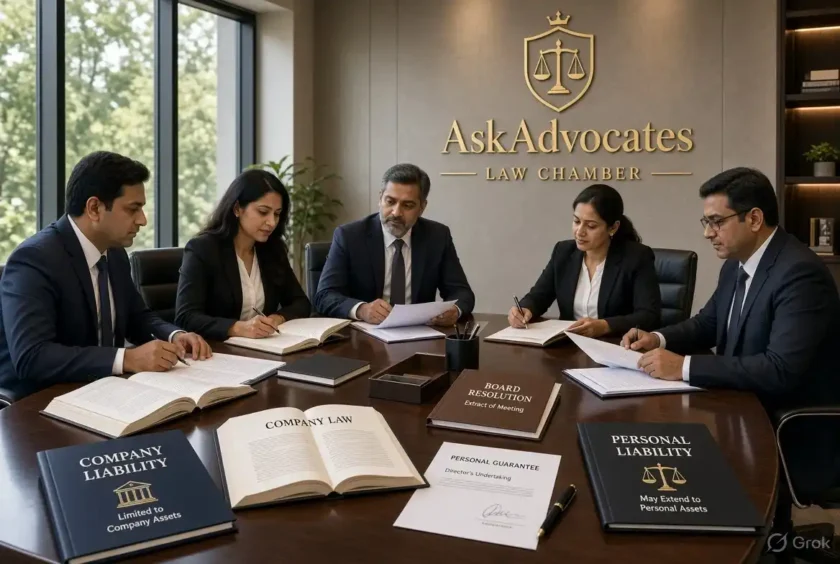
Director Liability in India: When Can Directors Be Personally Sued or Prosecuted?

Director Liability in India: When Can Directors Be Personally Sued or Prosecuted?

A company is a separate legal person. Its directors manage the company, but they do not ordinarily become personally liable for every debt, contract, default or wrongful act of the company merely because they hold office as directors. This distinction is fundamental to Indian company law. At the same time, the protection of separate corporate

Director Liability in India: When Can Directors Be Personally Sued or Prosecuted? Read More »

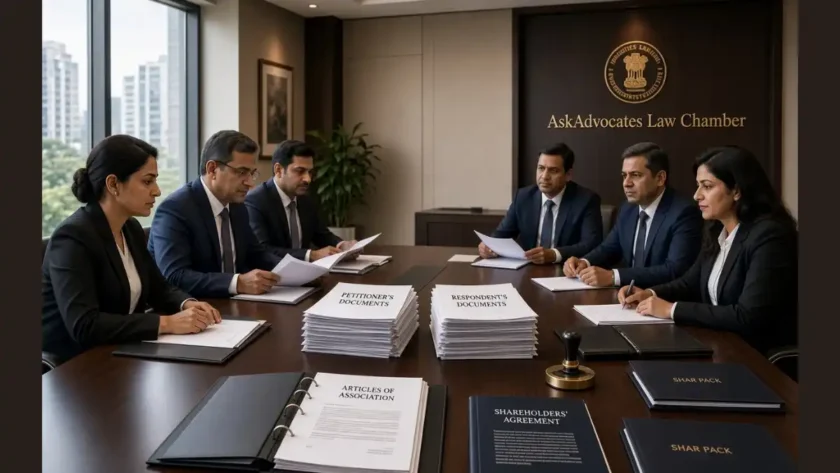
Shareholder Disputes in Private Companies: Board Deadlock, Minority Rights and Legal Remedies

Shareholder Disputes in Private Companies: Board Deadlock, Minority Rights and Legal Remedies

Shareholder disputes in private companies can become significantly more complicated than ordinary commercial disagreements. A dispute may begin with disagreement between two founders and later involve board deadlock, exclusion from management, disputed share transfers, refusal to provide information, removal of directors, competing shareholder groups, alleged diversion of assets, disputed allotment of shares, or breakdown of

Shareholder Disputes in Private Companies: Board Deadlock, Minority Rights and Legal Remedies Read More »

How to Challenge or Quash an FIR in India: High Court Remedies under BNSS

How to Challenge or Quash an FIR in India: High Court Remedies under BNSS

Registration of an FIR does not mean that the accused has been found guilty. An FIR starts or records the criminal investigation process. In appropriate cases, however, an accused person can approach the High Court and seek judicial intervention before the criminal process proceeds further. Under the Bharatiya Nagarik Suraksha Sanhita, 2023, Section 528 preserves

How to Challenge or Quash an FIR in India: High Court Remedies under BNSS Read More »

RSS
Follow by Email
Scroll to Top