GST Show Cause Notice in India: Scrutiny, Demand, Adjudication and Appeal

GST Show Cause Notice in India: Scrutiny, Demand, Adjudication and Appeal

A GST show cause notice can expose a business to disputed tax demands, interest, penalties, and recovery proceedings. However, receiving a notice does not automatically establish a taxpayer’s liability. The correct response depends on the statutory provision, relevant tax period, allegations, supporting evidence, and procedural stage. Businesses must distinguish scrutiny communications, audit observations, investigation documents,

GST Show Cause Notice in India: Scrutiny, Demand, Adjudication and Appeal Read More »
Writ Petition for Government Service Disputes_ When Can the High Court Intervene_

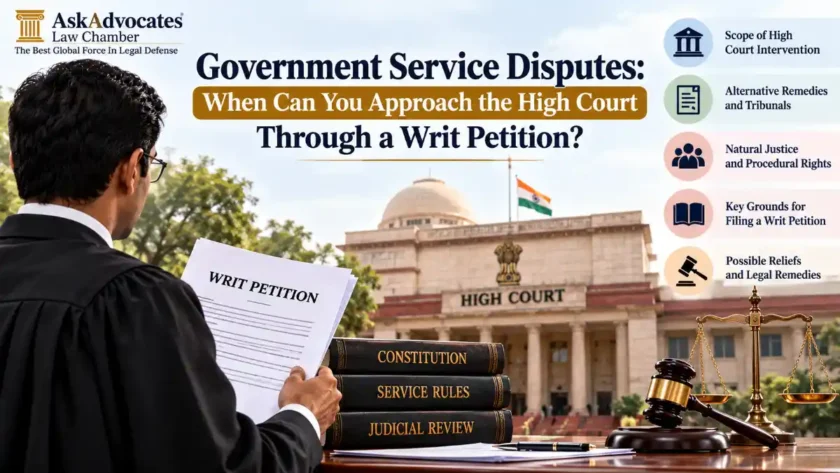
Writ Petition for Government Service Disputes: When Can the High Court Intervene?

A writ petition for government service disputes can help employees challenge unlawful administrative decisions. However, the High Court does not ordinarily reconsider every disagreement with a government department. Article 226 empowers High Courts to examine public authorities’ actions within constitutional limits. Therefore, employees must identify a recognised legal defect before seeking judicial intervention. Common disputes

Writ Petition for Government Service Disputes: When Can the High Court Intervene? Read More »

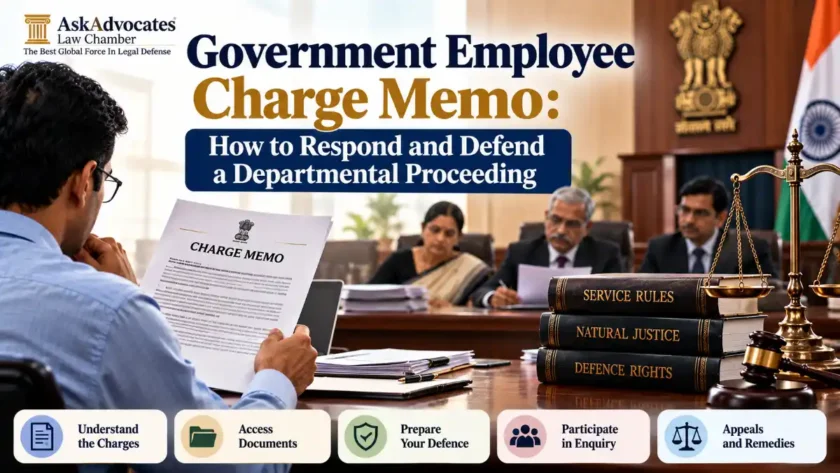
Government Employee Charge Memo: How to Respond and Defend a Departmental Proceeding

Government Employee Charge Memo: How to Respond and Defend a Departmental Proceeding

A government employee charge memo requires a timely, evidence-based response grounded in the applicable service rules. A poorly drafted reply can weaken the employee’s defence, while a structured response can expose factual gaps and procedural defects. AskAdvocates Law Chamber explains how employees can examine allegations, request relevant records, prepare written explanations and participate effectively in

Government Employee Charge Memo: How to Respond and Defend a Departmental Proceeding Read More »

Protecting Employee Rights During Departmental Enquiries: Key Rules of Natural Justice

Departmental Enquiry Against Government Employees: Natural Justice and Defence Rights

A departmental enquiry can affect a government employee’s career, salary, promotion, pension, and professional reputation. Depending on the applicable service rules, disciplinary proceedings may result in censure, withholding of increments, reduction in rank, compulsory retirement, removal, or dismissal. Therefore, receiving a charge memo requires a prompt, informed, and carefully documented response. Employees should understand the

Departmental Enquiry Against Government Employees: Natural Justice and Defence Rights Read More »

Hindu Coparcenary Property After Vineeta Sharma: Rights of Daughters Explained

Hindu Coparcenary Property After Vineeta Sharma: Rights of Daughters Explained

Daughters in Hindu families have the same statutory coparcenary rights as sons under Section 6 of the Hindu Succession Act, 1956. The Supreme Court clarified this principle in Vineeta Sharma v. Rakesh Sharma, (2020) 9 SCC 1. However, the judgment does not make every property owned by a father or grandfather coparcenary property. The nature

Hindu Coparcenary Property After Vineeta Sharma: Rights of Daughters Explained Read More »

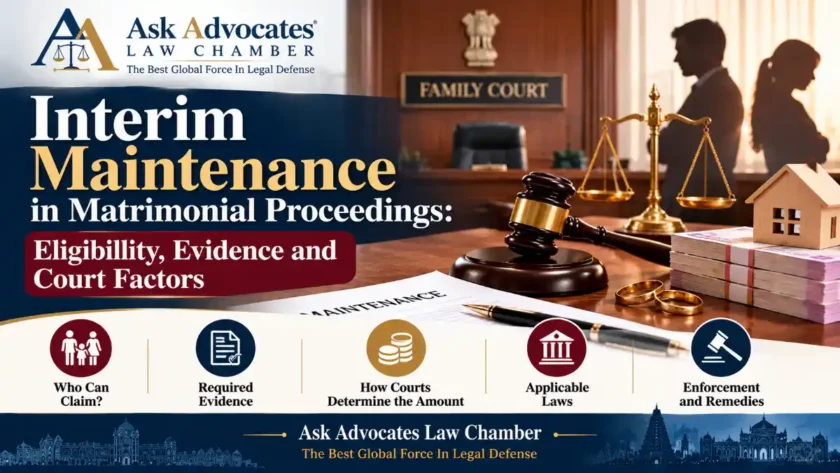
Interim Maintenance in Matrimonial Proceedings: Eligibility, Evidence and Court Factors

Interim Maintenance in Matrimonial Proceedings: Eligibility, Evidence and Court Factors

Interim Maintenance in Matrimonial Cases: Legal Eligibility, Required Evidence and Judicial Considerations – FAMILY LAW • MATRIMONIAL LITIGATION • INDIA Interim maintenance in matrimonial proceedings helps eligible spouses meet reasonable living expenses and litigation costs while a case remains pending. Indian law provides different maintenance remedies, depending on the proceeding, applicable statute and claimant’s circumstances.

Interim Maintenance in Matrimonial Proceedings: Eligibility, Evidence and Court Factors Read More »

Contested Divorce on Mental Cruelty in India: Evidence, Pleadings and Litigation Strategy

Contested Divorce on Mental Cruelty in India: Evidence, Pleadings and Litigation Strategy

Mental cruelty can provide grounds for contested divorce under applicable Indian matrimonial law. However, marital disagreements alone do not automatically establish cruelty. Courts examine the nature, frequency, seriousness, and overall impact of the alleged conduct. Therefore, a successful contested divorce petition requires precise pleadings, reliable evidence, and a legally sustainable litigation strategy. Ask Advocates Law

Contested Divorce on Mental Cruelty in India: Evidence, Pleadings and Litigation Strategy Read More »

Corporate Contract Disputes in India

Corporate Contract Disputes in India: Arbitration, Commercial Courts and Interim Remedies

Corporate Contract Disputes in India: Arbitration, Commercial Courts and Interim Remedies Corporate contract disputes can disrupt cash flow, commercial relationships, intellectual property rights, business operations, and investment decisions. Therefore, companies need a legally sound response that protects their interests without creating avoidable procedural risks. The correct strategy depends on the agreement, the dispute-resolution clause, limitation,

Corporate Contract Disputes in India: Arbitration, Commercial Courts and Interim Remedies Read More »

RSS
Follow by Email
Scroll to Top