Criminal Law

How to Challenge or Quash an FIR in India: High Court Remedies under BNSS

How to Challenge or Quash an FIR in India: High Court Remedies under BNSS

Registration of an FIR does not mean that the accused has been found guilty. An FIR starts or records the criminal investigation process. In appropriate cases, however, an accused person can approach the High Court and seek judicial intervention before the criminal process proceeds further. Under the Bharatiya Nagarik Suraksha Sanhita, 2023, Section 528 preserves

How to Challenge or Quash an FIR in India: High Court Remedies under BNSS Read More »
Regular Bail in India Under BNSS: When and How Can an Accused Seek Release After Arrest?

Regular Bail in India Under BNSS: When and How Can an Accused Seek Release After Arrest?

Regular bail is the principal remedy by which an accused person in custody seeks release during a criminal proceeding. The fact that an offence is described as “non-bailable” does not mean that bail is legally impossible. It means that bail is not an automatic statutory entitlement in the same way as bail for a bailable

Regular Bail in India Under BNSS: When and How Can an Accused Seek Release After Arrest? Read More »

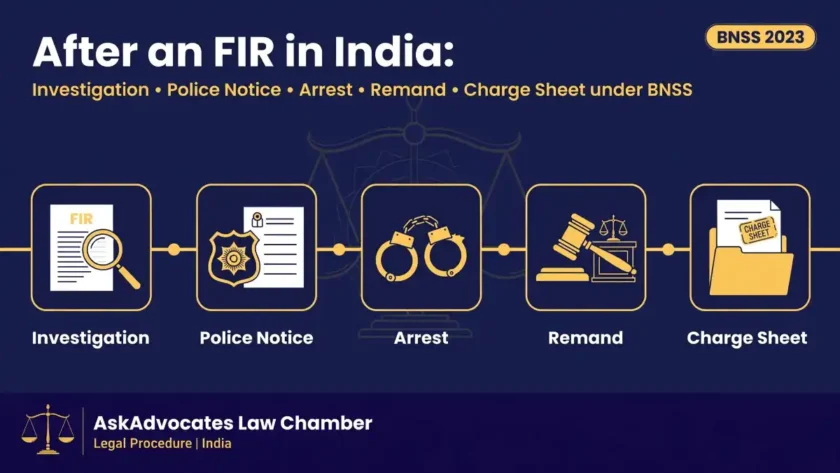
After an FIR in India: Investigation, Police Notice, Arrest, Remand and Charge Sheet under BNSS"

After an FIR in India: Investigation, Police Notice, Arrest, Remand and Charge Sheet under BNSS

Introduction: An FIR is not the end of a criminal case. It is generally the beginning of the formal criminal investigation process. First, after recording information regarding a cognizable offence, the investigating officer immediately collects relevant physical evidence and examines key witnesses. Subsequently, the police conduct necessary searches, seize critical documents, and issue statutory notices

After an FIR in India: Investigation, Police Notice, Arrest, Remand and Charge Sheet under BNSS Read More »

RSS
Follow by Email
Scroll to Top