Assertive Defense Strategies - Criminal allegations can affect liberty, reputation, employment, and family life. Therefore, immediate legal representation becomes essential after arrest or investigation. Ask Advocates Law Chamber provides strategic criminal defense across diverse criminal matters. The Bharatiya Nyaya Sanhita, 2023 defines offences and punishments. Moreover, the Bharatiya Nagarik Suraksha Sanhita, 2023 governs investigation and trial procedures. The Bharatiya Sakshya Adhiniyam, 2023 regulates admissibility and evaluation of evidence. Effective defense begins with early case assessment and evidence review. Lawyers examine FIRs, witness statements, digital records, and procedural compliance carefully. Timely intervention often prevents avoidable legal complications.
Assertive Defense Strategies: Premier Criminal Law Firm at Your Service - Ask Advocates Law Chamber
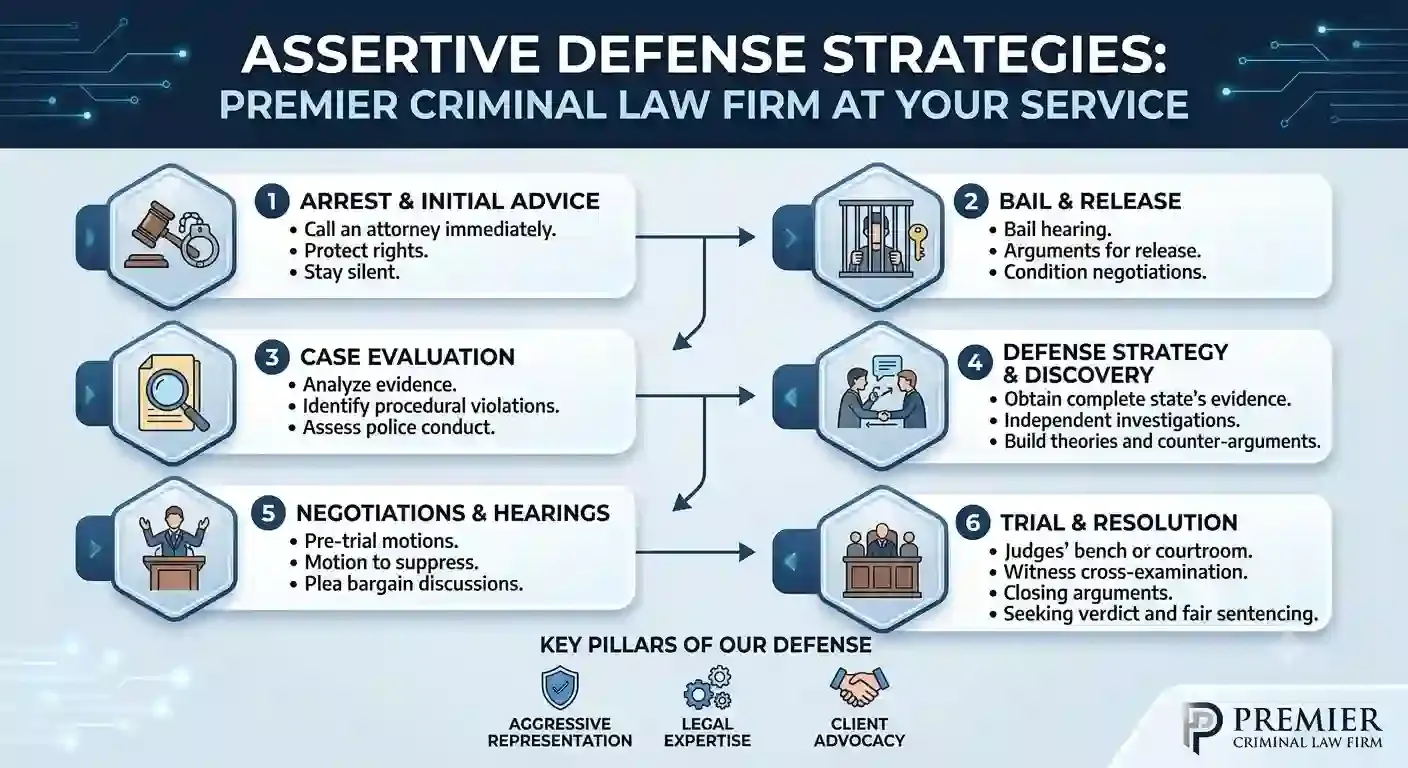
Criminal defense services cover:
- Bail proceedings
- Anticipatory bail
- Trial defense
- Appeals
- Quashing petitions
- Police representation
Consequently, accused persons receive informed guidance while protecting constitutional and statutory rights throughout proceedings.
Common Criminal Cases Requiring Legal Representation
Criminal litigation involves numerous offences under modern laws. Accused persons often face complex investigations and procedural challenges. Furthermore, allegations may arise from personal, commercial, or cyber-related disputes. Common criminal matters include:
- Assault offences
- Cheating allegations
- Criminal breach of trust
- Cybercrime cases
- Domestic violence allegations
- Financial fraud cases
- Property offences
- White-collar crimes
Each matter requires customized legal strategy and factual analysis. Therefore, defense lawyers evaluate evidence before recommending legal action. Early representation protects rights during police inquiries and custodial proceedings. Consequently, accused individuals improve their ability to contest allegations effectively and lawfully.
Importance of Early Legal Intervention
Prompt legal action often shapes the outcome of criminal proceedings. Lawyers assess procedural defects and evidentiary weaknesses immediately. Moreover, early intervention safeguards constitutional protections against unlawful actions. Key benefits include:
| Legal Support | Purpose |
|---|---|
| Bail Advice | Liberty protection |
| FIR Review | Case assessment |
| Evidence Analysis | Defense planning |
| Police Representation | Rights protection |
| Trial Preparation | Litigation readiness |
Delays may weaken defense opportunities significantly. Therefore, accused persons should consult experienced criminal lawyers promptly. Strategic planning helps preserve evidence and identify favorable legal remedies. Consequently, clients gain stronger protection throughout investigation and trial stages.
Bail, Anticipatory Bail and Personal Liberty
Liberty remains a fundamental concern during criminal proceedings. Courts examine allegations, evidence, and legal requirements while deciding bail requests. Furthermore, anticipatory bail protects individuals fearing arrest. Important remedies include:
- Regular bail
- Anticipatory bail
- Interim bail
- Default bail
- Suspension of sentence
Legal representation strengthens applications through persuasive submissions and supporting materials. Therefore, experienced advocacy becomes critical in urgent situations. Proper preparation improves prospects for favorable judicial consideration. Consequently, individuals protect freedom while defending criminal allegations effectively.
Defense Strategies During Investigation
Investigations require careful legal monitoring and timely responses. Lawyers review notices, summons, and police actions continuously. Moreover, procedural violations may influence future proceedings significantly. Effective defense strategies include:
- Evidence examination
- Witness assessment
- Legal notice responses
- Documentation review
- Procedural compliance checks
- Rights protection measures
Defense counsel ensures lawful treatment throughout investigations. Therefore, clients avoid unnecessary admissions and procedural mistakes. Strategic representation strengthens future trial positions considerably. Consequently, accused persons maintain better control over legal risks and outcomes.
Trial Defense and Court Representation
Criminal trials require detailed preparation and effective courtroom advocacy. Prosecutors must establish allegations through admissible evidence. However, defense lawyers challenge weaknesses and inconsistencies actively. Key trial activities include:
- Cross-examination
- Documentary evidence review
- Legal arguments
- Witness credibility assessment
- Defense evidence presentation
Courts evaluate facts and applicable laws before delivering judgments. Therefore, comprehensive preparation remains essential. Strong courtroom representation often influences final outcomes significantly. Consequently, clients receive meaningful opportunities to defend against criminal allegations.
Criminal Courts, Authorities and Jurisdiction
Criminal proceedings involve multiple authorities and judicial forums. Police stations generally initiate criminal investigations through FIR registration. Additionally, specialized agencies investigate complex offences. Relevant authorities include:
| Authority | Function |
|---|---|
| Police Stations | Investigation |
| Cyber Crime Cells | Digital offences |
| Magistrate Courts | Criminal trials |
| Sessions Courts | Serious offences |
| High Courts | Extraordinary remedies |
| Supreme Court | Appellate review |
Jurisdiction depends upon offence nature and statutory provisions. Therefore, legal analysis determines the proper forum and strategy. Effective representation ensures procedural compliance and protection of legal rights throughout proceedings.
BNS, BNSS and BSA in Modern Criminal Litigation
India's criminal justice framework now operates under updated statutes. The Bharatiya Nyaya Sanhita, 2023 defines criminal offences comprehensively. Furthermore, the Bharatiya Nagarik Suraksha Sanhita, 2023 governs procedural safeguards. The Bharatiya Sakshya Adhiniyam, 2023 regulates evidentiary standards. Important legal issues include:
- Arrest procedures
- Electronic evidence
- Witness testimony
- Investigation compliance
- Trial safeguards
Legal professionals analyze statutory provisions carefully. Therefore, defense strategies align with current legal requirements. Accurate interpretation strengthens case preparation and procedural challenges. Consequently, clients receive modern and effective criminal defense representation.
Appeals, Revisions and Post-Conviction Remedies
Criminal litigation may continue beyond trial judgments. Appellate remedies provide opportunities to challenge adverse findings. Moreover, courts review legal errors and evidentiary issues. Available remedies include:
- Criminal appeals
- Revision petitions
- Sentence suspension
- Acquittal challenges
- Review of procedural irregularities
Timely filings preserve valuable legal rights. Therefore, post-conviction strategy remains critical for affected individuals. Experienced lawyers identify appealable issues and prepare comprehensive submissions. Consequently, clients pursue meaningful relief through higher judicial forums.
Why Choose Ask Advocates Law Chamber
Criminal allegations demand immediate and knowledgeable legal support. Ask Advocates Law Chamber provides comprehensive defense services across investigation, trial, and appellate stages. Furthermore, our team handles bail matters, cybercrime cases, economic offences, property disputes, and serious criminal allegations. We evaluate evidence thoroughly and develop customized defense strategies. Services include:
- Bail representation
- Trial advocacy
- Appeal drafting
- Police station assistance
- Cybercrime defense
- Constitutional remedies
Strategic legal representation protects liberty and reputation effectively. Therefore, clients receive dedicated support throughout every stage of proceedings. Consequently, individuals, businesses, NGOs, and NRIs gain strong legal defense against criminal allegations.
Effective Defense Creates Better Legal Outcomes
Criminal proceedings present significant legal and personal challenges. However, timely legal action often improves outcomes substantially. Ask Advocates Law Chamber combines legal knowledge, courtroom experience, and strategic planning. Moreover, our team protects rights before police authorities, trial courts, appellate courts, and constitutional forums. Effective defense requires evidence analysis, procedural compliance review, and persuasive advocacy. Therefore, professional representation remains essential from investigation through appeal. Consequently, clients navigate criminal proceedings confidently while safeguarding liberty, reputation, and future opportunities under Indian law.
Frequently Asked Questions
Q1. When should I contact a criminal lawyer?
Contact a lawyer immediately after arrest, notice, summons, FIR registration, or criminal investigation concerns.
Q2. Can I obtain anticipatory bail before arrest?
Yes. Courts may grant anticipatory bail when legal requirements and factual circumstances justify protection.
Q3. What rights do accused persons possess during investigations?
Accused persons enjoy constitutional protections, legal representation rights, and safeguards against unlawful procedures.
Q4. Can criminal cases be challenged before trial?
Yes. Courts may entertain quashing petitions, discharge applications, and procedural challenges where appropriate.
Q5. Are electronic records admissible in criminal cases?
Yes. Courts may consider electronic evidence subject to statutory requirements and evidentiary standards.
Q6. Can I appeal a criminal conviction?
Yes. Criminal appeals, revisions, and sentence-related remedies remain available under applicable laws.
Read More
- Innovate with Confidence: Tailored Legal Solutions for Intellectual Property
- Maximize Your IP Assets: Legal Support for Trademarks, Patents, and Copyrights
- Safeguard Your Creations: Expert Intellectual Property Law Guidance
- Protect Your Innovations: Trusted Intellectual Property Legal Services
- Strategic Legal Counsel for Corporate Formation and Operations
- Ministry of Home Affairs (MHA)