Ensuring Ethical Business Practices - In today’s fast-changing business world, ethics matter more than ever. Companies are no longer judged only by profits. Instead, they are measured by honesty, transparency, and responsibility. Ethical business practices build trust, protect reputation, and ensure long-term growth. Therefore, regulatory integrity plays a crucial role in shaping strong and sustainable businesses.
At Ask Advocates Law Chamber: The Best Global Force in Legal Defense, we believe that ethical conduct and legal compliance go hand in hand. Through strategic advocacy, legal guidance, and strong defense, we help businesses operate lawfully while upholding the highest ethical standards.
Ensuring Ethical Business Practices: Advocacy for Regulatory Integrity - Ask Advocates Law Chamber
Understanding Ethical Business Practices
Ethical business practices refer to conducting operations fairly, responsibly, and transparently. This includes honest financial reporting, lawful contracts, fair treatment of employees, and respect for customers and stakeholders.
Moreover, ethical conduct reduces legal risks and strengthens corporate credibility. When businesses act ethically, they not only follow the law but also create positive social impact. As a result, they earn trust from regulators, investors, and the public.
The Role of Regulatory Integrity in Modern Business
Regulatory integrity ensures that laws are applied fairly and consistently. It protects markets from fraud, corruption, and abuse. Furthermore, strong regulations create a level playing field where honest businesses can compete fairly.
However, regulatory frameworks are complex and constantly evolving. Therefore, businesses need expert legal support to understand and comply with these rules. This is where Ask Advocates Law Chamber plays a vital role.
Why Ethical Compliance Is a Legal Necessity
Ethical behavior is not just a moral choice—it is a legal requirement. Laws related to corporate governance, taxation, labor, environment, and data protection demand strict compliance.
Failure to comply can result in penalties, investigations, and loss of reputation. On the other hand, ethical compliance helps businesses avoid disputes and regulatory actions. Consequently, companies that invest in compliance build resilience and credibility.
Ask Advocates Law Chamber: A Trusted Advocate for Integrity
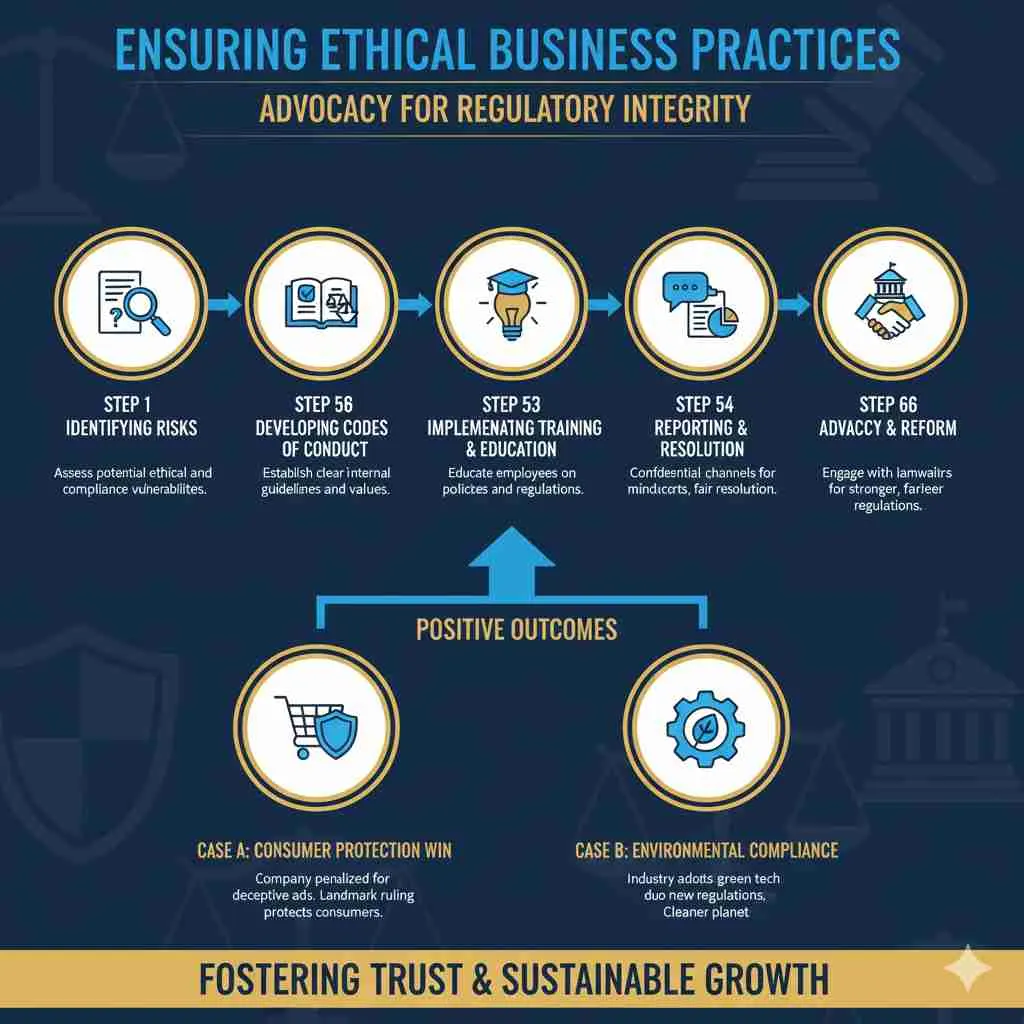
At Ask Advocates Law Chamber, we guide businesses through complex regulatory landscapes with clarity and confidence. Our legal team understands both local and international regulations. Therefore, we offer practical advice tailored to each client’s industry and scale.
In addition, we believe prevention is better than cure. We help businesses identify risks early and implement strong compliance systems. This proactive approach protects clients from future legal challenges.
Supporting Ethical Corporate Governance
Corporate governance forms the backbone of ethical business practices. It defines how companies make decisions, manage risks, and remain accountable.
Our lawyers assist boards and management in creating governance frameworks that promote transparency and responsibility. Furthermore, we advise on compliance with company laws, shareholder rights, and disclosure obligations. As a result, businesses operate with confidence and integrity.
Advocacy in Regulatory Investigations
Regulatory investigations can be stressful and damaging if mishandled. Whether it involves financial regulators, tax authorities, or enforcement agencies, expert legal advocacy is essential.
Ask Advocates Law Chamber represents clients during inquiries and investigations. We communicate with regulators clearly, protect client rights, and present facts effectively. Consequently, our advocacy helps resolve issues efficiently while safeguarding reputations.
Ensuring Ethical Practices in Cross-Border Operations
Global businesses face additional challenges due to differing legal systems and compliance standards. Cross-border trade, foreign investments, and international partnerships require careful legal planning.
Our law firm supports businesses operating across jurisdictions. We ensure compliance with international regulations while maintaining ethical consistency. Thus, clients can expand globally without compromising integrity.
Protecting Whistleblowers and Internal Reporting Systems
Ethical organizations encourage transparency and accountability. Whistleblower protection and internal reporting systems play a key role in identifying misconduct early.
Ask Advocates Law Chamber helps businesses design lawful and effective reporting mechanisms. At the same time, we defend whistleblowers from retaliation. This balanced approach strengthens ethical culture and legal compliance.
Ethics in Financial and Tax Compliance
Financial integrity is central to ethical business practices. Accurate accounting, lawful tax planning, and honest disclosures protect businesses from serious legal trouble.
Our legal experts advise on financial compliance and represent clients during audits or disputes. Moreover, we help businesses adopt ethical tax strategies that align with regulatory expectations.
Employment Ethics and Workplace Compliance
Ethical treatment of employees builds loyalty and productivity. Employment laws govern wages, safety, discrimination, and termination.
Ask Advocates Law Chamber ensures that businesses follow labor laws and ethical employment practices. By doing so, we help clients avoid disputes and foster positive work environments.
Environmental and Social Responsibility
Today, businesses are accountable not only to regulators but also to society. Environmental laws and social responsibility standards demand ethical action.
Our firm advises on environmental compliance and sustainable practices. As a result, businesses meet legal requirements while contributing positively to society.
Preventing Corporate Misconduct Through Legal Guidance
Most regulatory violations occur due to lack of awareness rather than intent. Therefore, education and guidance are essential.
We conduct compliance training and legal audits to prevent misconduct. This preventive approach saves businesses from costly penalties and reputational damage.
The Power of Ethical Advocacy
Legal advocacy is most effective when rooted in ethics. At Ask Advocates Law Chamber, we defend our clients vigorously while respecting the rule of law.
Our advocacy balances business interests with regulatory integrity. Thus, we help clients resolve disputes without compromising ethical values.
Building Long-Term Trust Through Compliance
Trust is the most valuable business asset. Ethical compliance builds trust with regulators, partners, and customers.
By working with Ask Advocates Law Chamber, businesses gain a legal partner committed to integrity, transparency, and excellence. Together, we build sustainable success.
Frequently Asked Questions
Ethical business practices mean operating with honesty, transparency, and accountability while following all applicable laws. They include fair contracts, accurate reporting, responsible employment practices, and respect for regulators. At Ask Advocates Law Chamber, ethical conduct is treated as a legal strength that protects reputation, reduces disputes, and supports sustainable long-term business growth. These standards also guide leadership decisions, internal controls, and stakeholder communication. When ethics shape policy, businesses gain employee trust, investor confidence, and public respect.
Regulatory integrity ensures laws are applied fairly and consistently to all businesses. It prevents corruption, misuse of power, and unfair competition. Strong regulatory systems build market confidence. Ask Advocates Law Chamber helps clients engage with regulators responsibly while defending their rights and maintaining lawful, ethical operations.
Businesses should seek legal guidance when designing compliance systems, facing investigations, expanding globally, or managing high-risk transactions. Early advice prevents violations and costly penalties. Ask Advocates Law Chamber provides proactive compliance support, internal audits, and clear strategies that align business goals with regulatory expectations.
Yes, ethical compliance reduces legal risks, improves reputation, and strengthens relationships with regulators and partners. Courts and authorities often view compliant businesses more favorably. With guidance from Ask Advocates Law Chamber, ethical practices become a strategic advantage rather than a burden.
Ask Advocates Law Chamber supports companies, NGOs, startups, and multinational businesses. Services include compliance advisory, regulatory defense, governance structuring, cross-border guidance, and ethical risk management. The firm combines strong advocacy with principled advice, ensuring clients meet legal duties while protecting long-term credibility and operational stability.
Conclusion: Ethics as a Strategic Advantage
Ensuring ethical business practices is no longer optional—it is essential. Regulatory integrity protects markets, consumers, and businesses alike.
Ask Advocates Law Chamber: The Best Global Force in Legal Defense stands as a strong advocate for ethical compliance and regulatory fairness. Through expert guidance and principled advocacy, we help businesses grow responsibly and confidently.
Read More
- Top FEMA Lawyers and Consultants for RBI Compliance, FDI Filings, and Cross-Border Transactions
- Resolving Non-compliance Issues: Trusted Legal Counsel for Regulatory Challenges
- Tamil lawyer Chennai consultation
- Regulatory Approvals and Filings: Premier Advocacy for Compliance Matters
- Exiting the STPI Scheme: Managing Liabilities and Legal Dispute Risks
- Address IP ownership conflicts, data privacy risks, and drafting dispute-proof collaboration agreements
- Ministry of Corporate Affairs (MCA)